Custom Wiring Design for Large-Format Industrial 3D Printing
Modern 3D printing systems, especially those designed for large-format manufacturing, demand complex and highly reliable electrical architectures. At Kabeltechnik, we support advanced equipment manufacturers by offering complete electrical harness development—from early design to series production.
One of our most demanding projects involved designing the full wiring system for a new generation of industrial 3D printers, capable of printing in both plastics and metals. These systems integrate hundreds of sensors, motors, heaters, and safety devices—all of which must be connected through a precise and durable wiring layout.
Our Role: From Concept to In-House Engineering
In large-scale development projects, we actively support our clients by deploying on-site engineering teams during the initial stages. Our experts work directly from the client’s R&D hub, collaborating on:
Architecture and harness design
BOM management for more than 300 cable references
Integration of special connectors, shielded cables, hybrid bundles, etc.
Routing optimization and mechanical fitting within the equipment
When the project demands it, our engineering team works directly from the customer’s offices, ensuring fast iterations and full technical alignment.
Kabeltechnik’s Contribution
✔️ Complete cable design including heavy-duty connectors, hybrid wiring, and shielded bundles ✔️ Prototype and pre-series builds done in our factory in Spain ✔️ Testing and quality control to validate form, fit, and function ✔️ Mass production in Asia managed under Kabeltechnik’s supervision and technical documentation
From Innovation to Scalable Production
Thanks to our dual model—local prototyping and offshore mass production—we can offer:
Fast project start with full engineering support.
Agile modifications during development.
Reliable large-volume manufacturing with cost efficiency.
A single point of contact from day one to final delivery
Whether the application involves industrial machinery, additive manufacturing or robotics, our team provides custom electrical solutions that power next-generation technology.
If you’re developing advanced equipment and need a wiring partner who understands both engineering complexity and industrial scalability, Kabeltechnik is here to support your journey—from sketch to series.
Custom Wiring Harness for Automotive Test Systems: Complex Multi-Connector Assemblies
At Kabeltechnik, we specialize in producing custom wiring harnesses for demanding applications in the automotive and industrial electronics sectors.
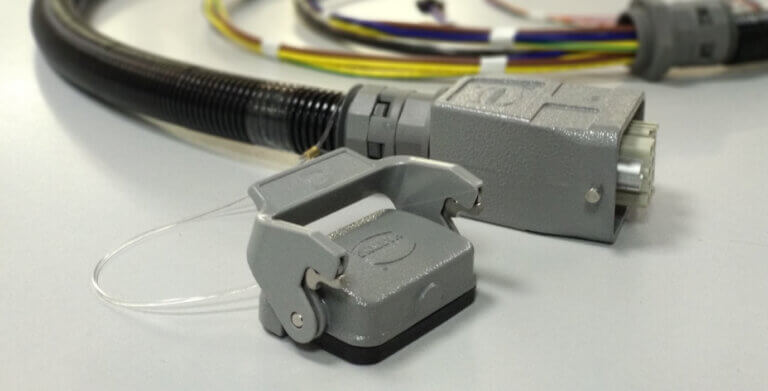
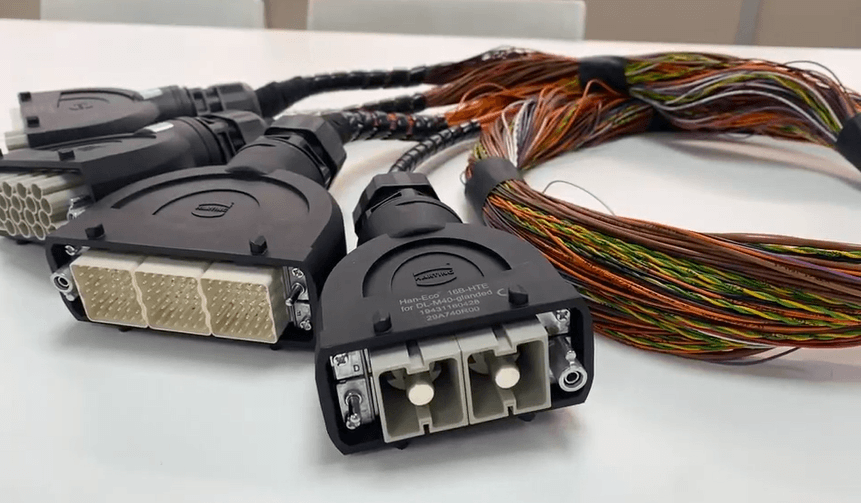
One of our recent projects involved the manufacturing of a complex, multi-connector cable assembly designed for integration into a vehicle testing system built by a major TIER 1 supplier. This setup allows engineers to simulate and validate various motion and detection sensors used in modern vehicles during development.
Project Overview
This cable harness included:
Up to 220 pins distributed across different connector interfaces
Modular heavy-duty connectors (Han-Eco® style) at one end
Automotive-grade ECU connectors (Yazaki-style) at the other
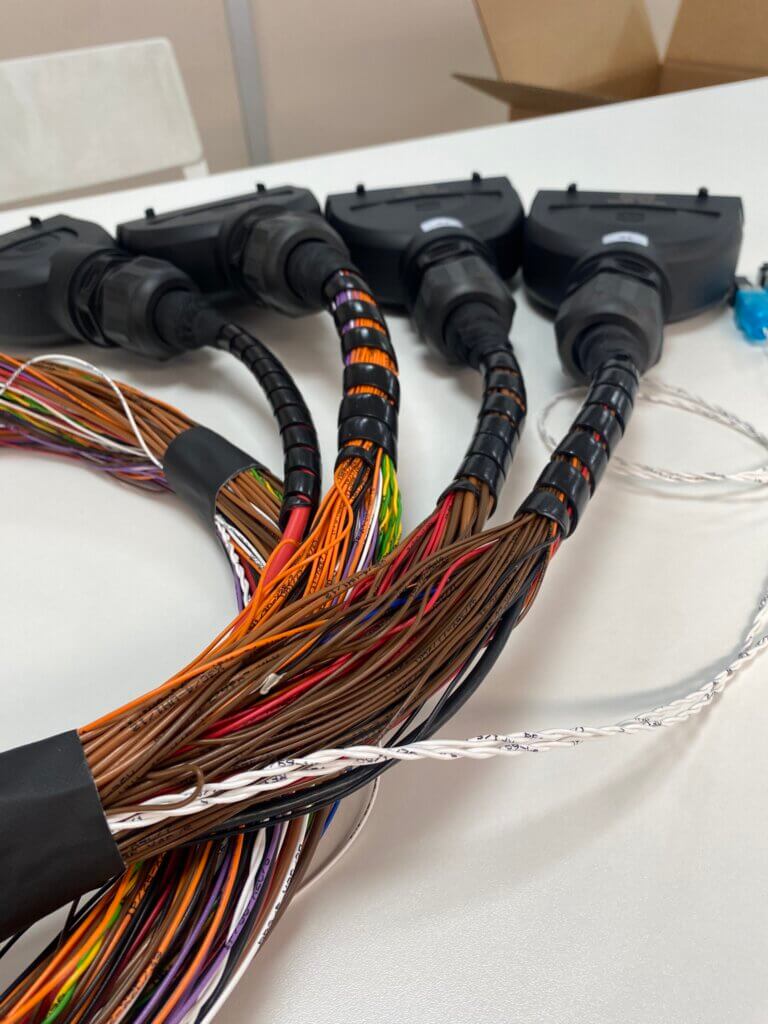
Color-coded and labeled wires for easy identification
Twisted pairs and shielding for signal integrity
Protective sleeving and organized bundling for long-term durability
Use Case: Modular Test Systems for OEMs
This wiring harness was built to support a modular and intelligent testing platform capable of simulating multiple sensor signals—such as radar, gyroscope, proximity, and movement detection.
For the OEM, this approach offers:
Fast and accurate ECU validation
A reusable system adaptable to multiple vehicle models
Lower total testing costs and faster development cycles
The custom cable design ensures compatibility, signal stability, and mechanical reliability during all test procedures.
Why Kabeltechnik?
✔️ Custom-built assemblies designed for each project’s unique requirements
✔️ Complete traceability of wires, connectors and specifications
✔️ Clean, organized layouts for efficient integration and maintenance
✔️ Automotive-grade standards applied to production and testing.
From development benches to final validation lines, we help engineering teams connect their systems with confidence
High-reliability connectors: key in the aerospace and defense industry
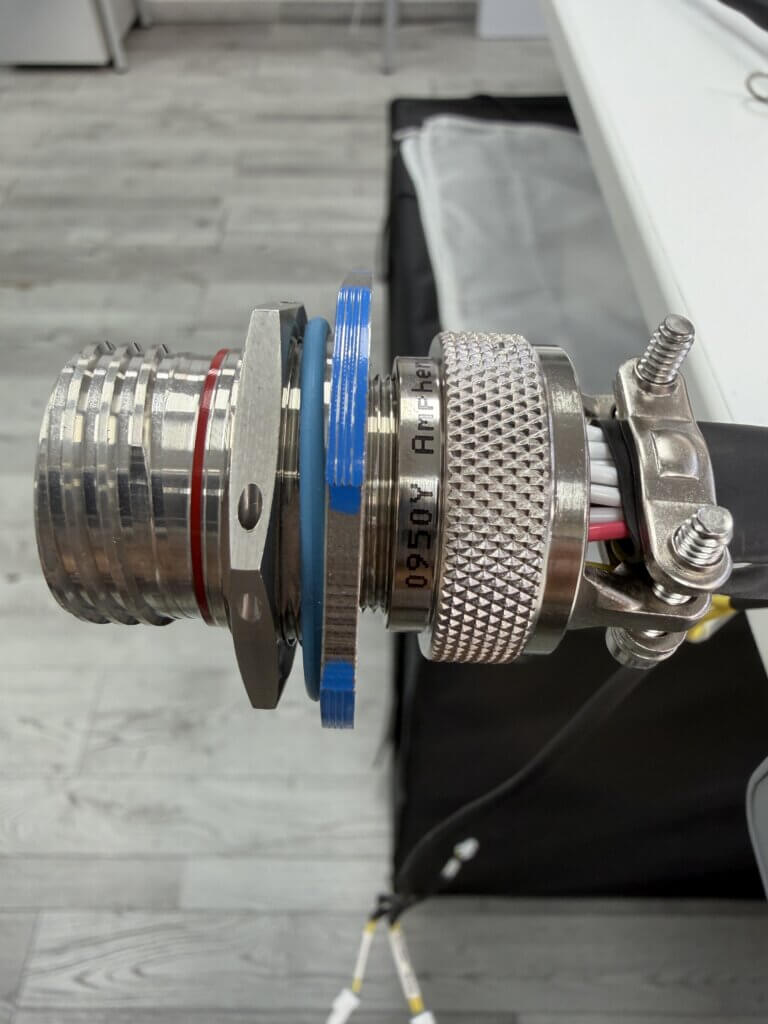
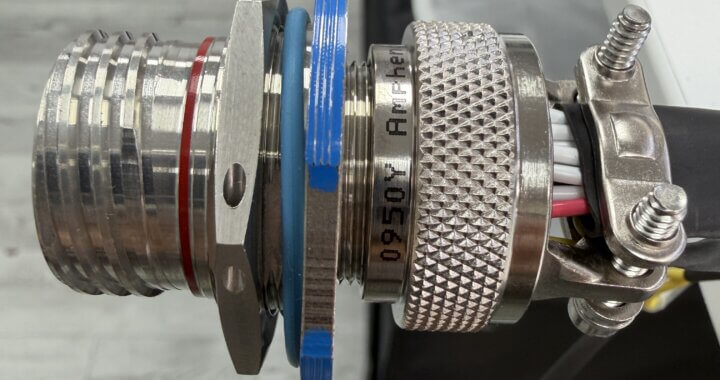
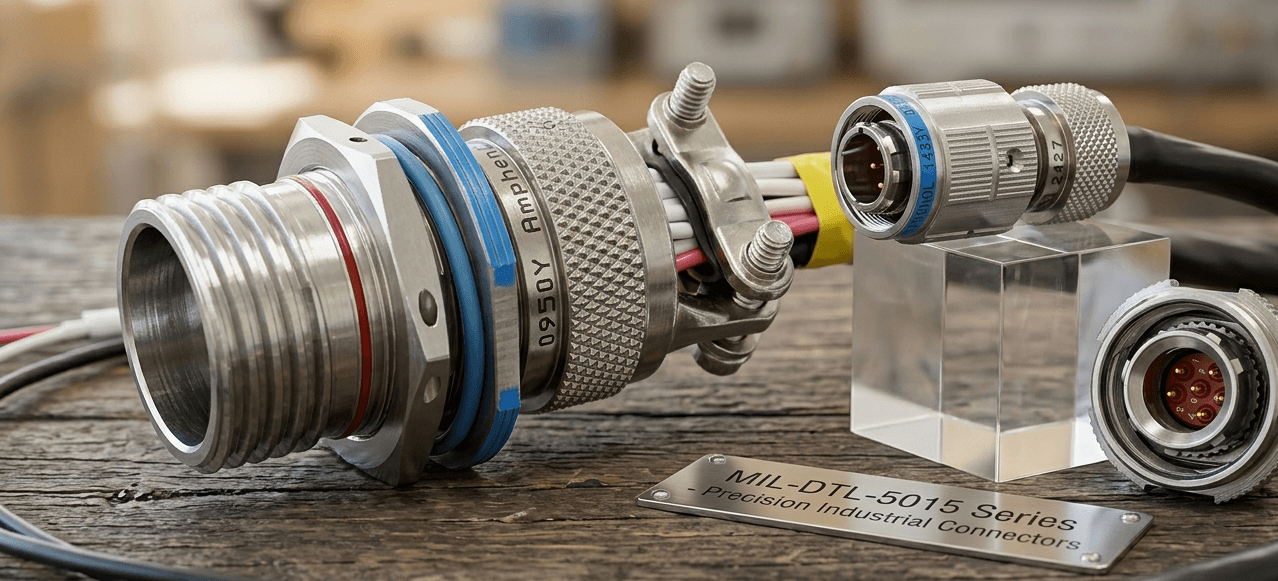
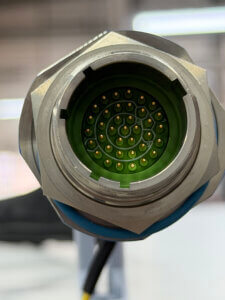
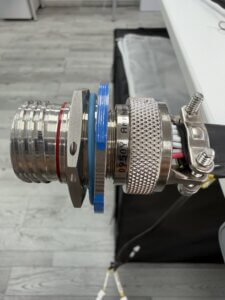
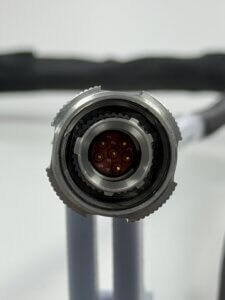
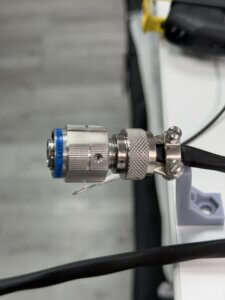
In environments where precision and reliability are critical, electrical connectors are not just another component—they become a strategic element. The images we share show different examples of high-performance circular multipin connectors, widely used in the aerospace industry and in military and defense applications.
What are these connectors?
They are electrical connectors designed to carry multiple signals—such as power, data, or control—through a single compact and strong interface. Their circular design is not random: it allows a safe, resistant, and easy connection, even in harsh conditions.
Many of these designs are based on standards like MIL-DTL-38999, which define strict performance requirements for critical applications.
MIL-DTL-38999 is a U.S. military standard that defines a family of high-density circular electrical connectors designed for extreme environments. It is widely used in aerospace, defense, and transportation applications where reliability, vibration resistance, and environmental sealing are required.
Where are they used?
These connectors are essential in sectors where errors are not acceptable:
Aerospace: avionics systems, sensors, actuators, and onboard communications
Defense and military: tactical equipment, vehicles, radars, and communication systems
Advanced industry: automation, robotics, and high-demand machinery
Manufacturers like MONTAGEN & KABELTECHNIK lead the development of these solutions, ensuring high-quality and reliable standards recognized worldwide.
Key features
What makes these connectors different from common solutions is their ability to work in extreme conditions:
High contact density: many connections in a small space
Resistance to vibration and shock: ideal for dynamic environments
Hermetic sealing: protection against dust, moisture, and chemicals
Durable materials: strong metals and anti-corrosion coatings
Secure locking systems: threaded or bayonet coupling to prevent accidental disconnection
Designed for extreme conditions
In military and aerospace applications, these connectors must withstand:
Sudden temperature changes
Constant vibrations
Exposure to moisture, dust, and fuels
Continuous operation without failure
Every detail in their design—from gold-plated pins to sealing systems—is made to ensure a stable connection in any situation.
Much more than a simple connector
At first glance, they may seem like small parts in a complex system, but these connectors play a key role: making sure that power and information flow without interruption.
In short, they are a clear example of how precision engineering supports the operation of critical technologies in the most demanding environments in the world.
Start of Production & Crimp Quality at Kabeltechnik: How We Ensure Safety from Day One
At Kabeltechnik, our focus on quality begins before the first cable is even built. From the early planning phase to final inspection, we apply strict controls to ensure that each crimp, connection and component meets the required standards.
In this post, we want to show two key processes we use to guarantee this: 🔹 CSA – Crimp Section Analysis 🔹 SOP – Start of Production Process
CSA: Crimp Section Analysis
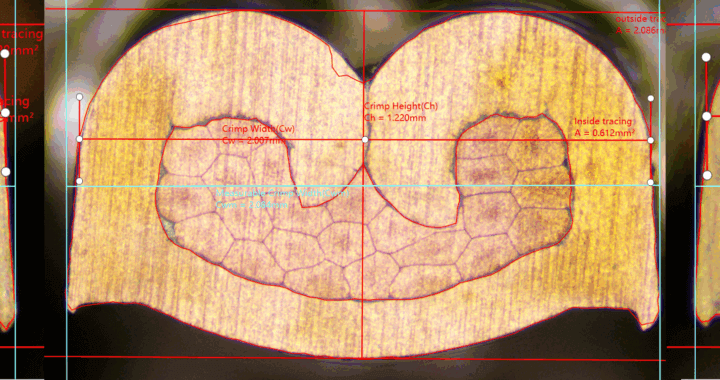
CSA (Crimp Section Analysis) is a destructive test used to check the internal quality of a crimp connection. Once the terminal is crimped onto the cable, we cut it and inspect the cross-section under magnification.
What we check:
Crimp height and width – must match manufacturer specs
Copper wire compression – all strands must be fully compacted
No empty spaces – no air gaps or poor contact
📸 Example from our lab (CSA report dated 21/10/2024):
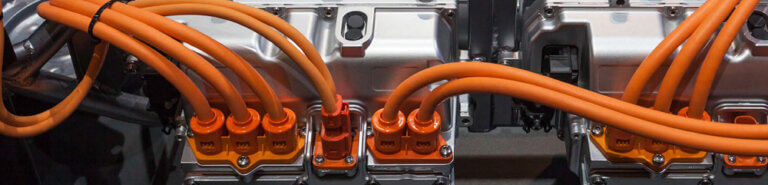
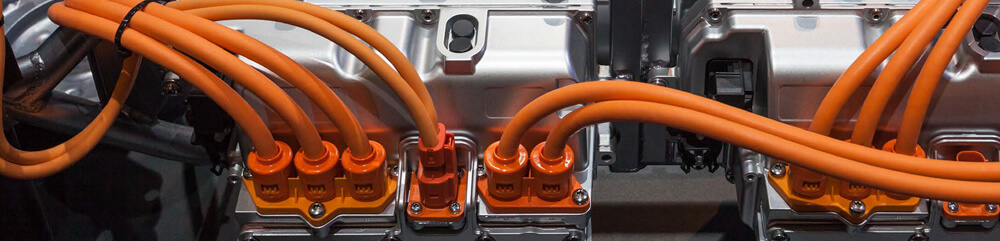
At Kabeltechnik, quality and safety are key when we manufacture high-current or battery cables. These types of cables are used in demanding environments—like electric vehicles, energy systems or industrial machinery—where failure is not an option.
That’s why we follow a strict quality control process during and after the crimping of large section cables.
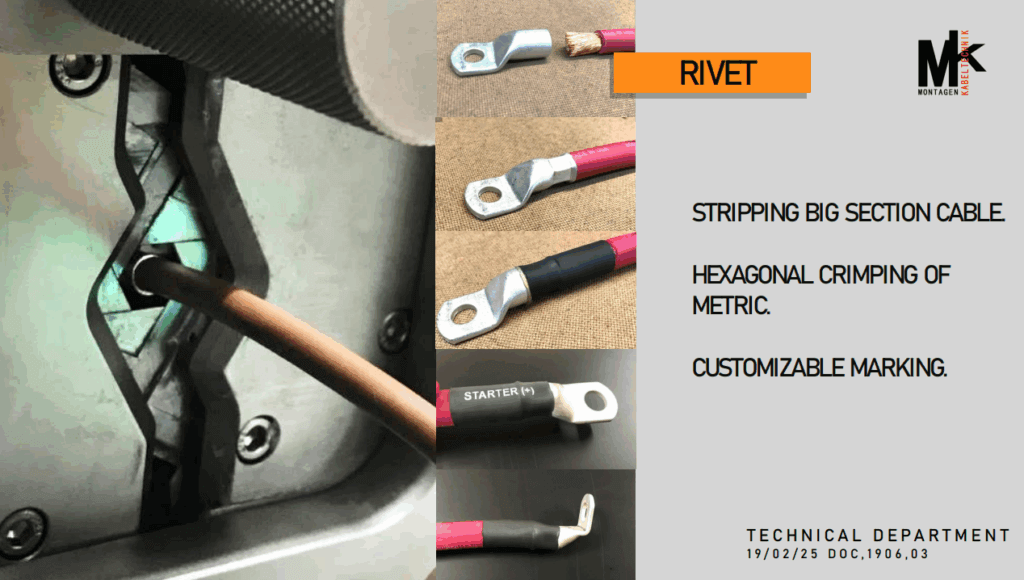
Precision Crimping with Rivet Technology
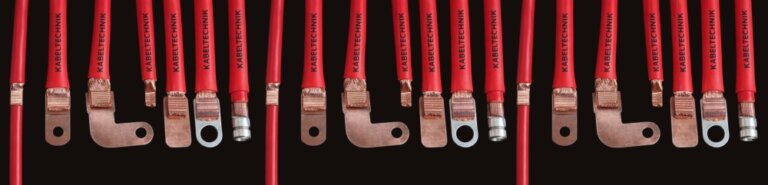
We use hexagonal crimping tools that ensure strong and reliable contact between the copper conductor and the terminal. These machines are designed specifically for large-section cables, and allow for:
Precise cable stripping
Metric-compliant hexagonal crimp
Custom markings (e.g., STARTER (+), part codes)
Example of cable preparation and crimping process:
Quality Control Tests We Perform
Before a cable assembly leaves our facility, it goes through destructive testing to confirm it meets both mechanical and electrical safety standards.
1. Pull-Force Test
We apply a pulling force higher than what the terminal manufacturer requires. This ensures that the crimp is mechanically strong and won’t fail under stress.
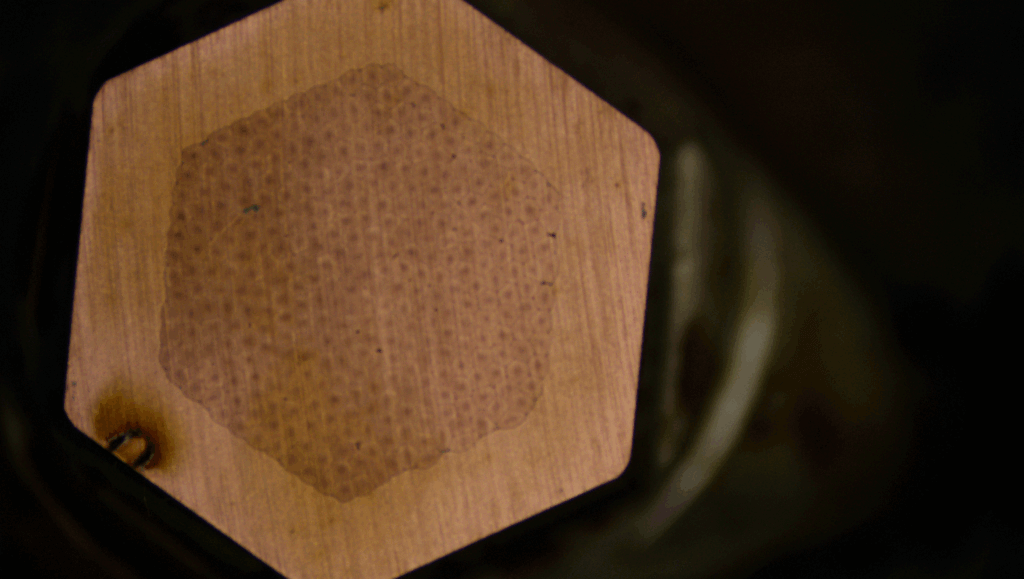
2. Cross-Section Analysis
We cut and polish the crimped terminal to examine the inside structure. This allows us to check that:
All copper strands have been compressed correctly
There are no voids or air pockets
The compression is compact and uniform
Some real test samples from our lab:
These steps help us ensure that the cables can safely carry the required current and voltage, and resist the heat and vibration present in real-world applications.
Final Results: Safe and Reliable Power Cables
By combining advanced crimping tools with thorough quality control testing, we can guarantee performance and safety in every high-power cable we deliver.
This process is already in use for several customers—and we’re ready to scale it for new projects that demand the same level of reliability.
Advancing Cable & Terminal Connections at Kabeltechnik
At Kabeltechnik, we are always working to improve how we connect cables and terminals. One of our latest improvements is a new ultrasonic welding process that we are now using for high-current connections.
This method gives us better quality, more reliable results, and new options for demanding applications—especially in the automotive and industrial sectors.
What’s New?
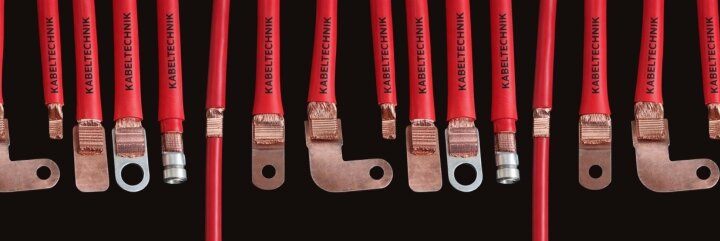
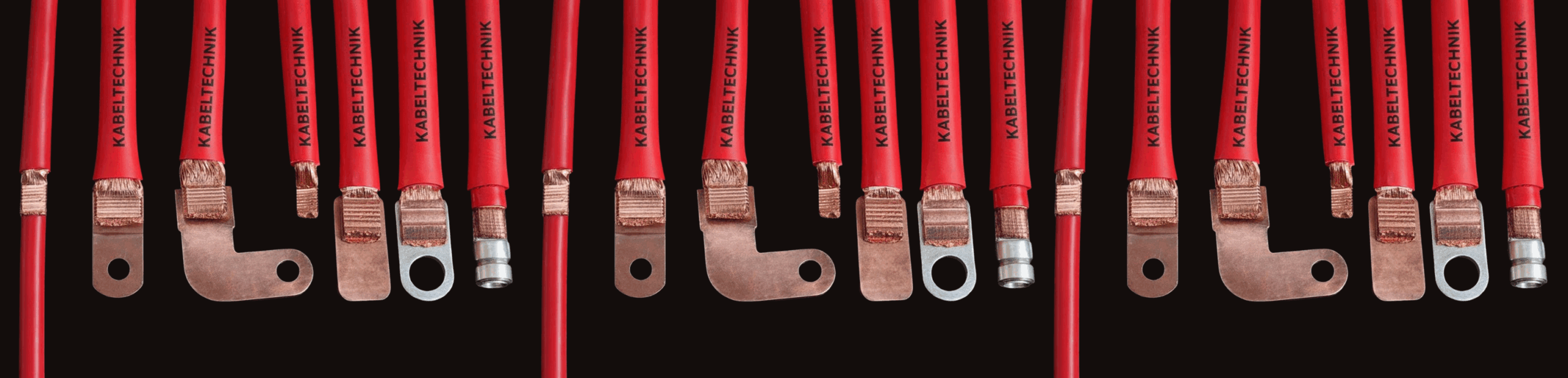
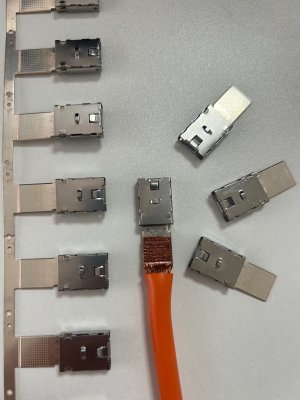
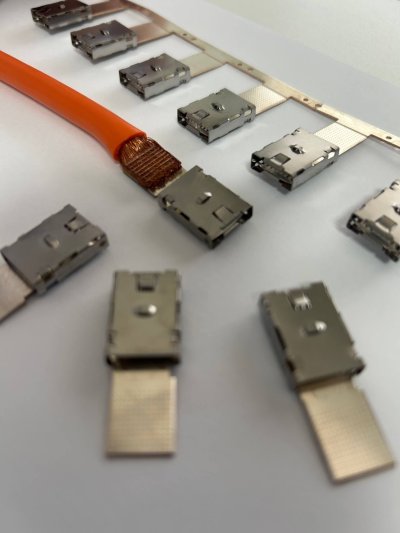
Until now, we’ve been using ultrasonic welding mainly for splices (joining cables together). Now, we can also use this technology to weld terminals like the one shown in the pictures below.
These terminals are designed for high power (high current), where strength and electrical performance are key.
Take a look at some of the first samples we produced:
Why Use Ultrasonic Welding?
Ultrasonic welding is a fast and clean way to join metal parts using vibrations and pressure, without needing solder or screws.
Its main advantages:
Very good electrical contact (low resistance)
Reliable and consistent results
No need for extra materials.
Faster and cleaner than other methods
It’s a great fit for projects like:
Electric vehicles (EVs)
Battery connections
High-power sensors and modules
Industrial power systems
Ready for the Future
This new process helps us offer better solutions for customers who need:
Strong and stable electrical connections
Clean and modern manufacturing
Flexible designs for custom needs
Our machines are ready, and our team is trained to deliver these kinds of welds in both small batches and large-scale production.
Let’s Talk
If you’re working on a project that needs high-power connections, or you’re exploring new welding technologies, we’d love to hear from you.
More innovations coming soon—stay connected with Kabeltechnik.